About: This piece explores how Casa Mărioarei, a WAVE member in the Republic of Moldova that has supported women and children survivors of domestic violence since 2000, opened conversations about gender stereotypes, self-worth and violence in schools and communities through its project “Strong, Authentic. You”. Drawing on participants’ own feedback and the story of a student training as an automotive mechanic, it shows how early education supports girls in recognising unhealthy relationships and choosing their own paths.
By Natalia Screlea
“I’ve realised that I am equal, not inferior to men.”
These words, written by one of the adolescent girls who took part in the “Strong, Authentic. You – Second Edition” project, are among nearly 200 pieces of feedback collected from girls in three regions of the Republic of Moldova: Leova, Nisporeni and Chișinău.
The project is run by the Association Against Domestic Violence “Casa Mărioarei”, which has supported women and children survivors of domestic violence since 2000. Each year, the association offers psychological, social, legal and medical support and shelter to around 800 women and children, and runs prevention and gender equality programmes alongside this work.
For the Casa Mărioarei team, this is more than a response to an awareness-raising session. It shows that a conversation about gender equality can challenge long-held beliefs, help girls better understand their rights, and open up new possibilities for their future.
Beyond Stereotypes, Towards Their Own Choices
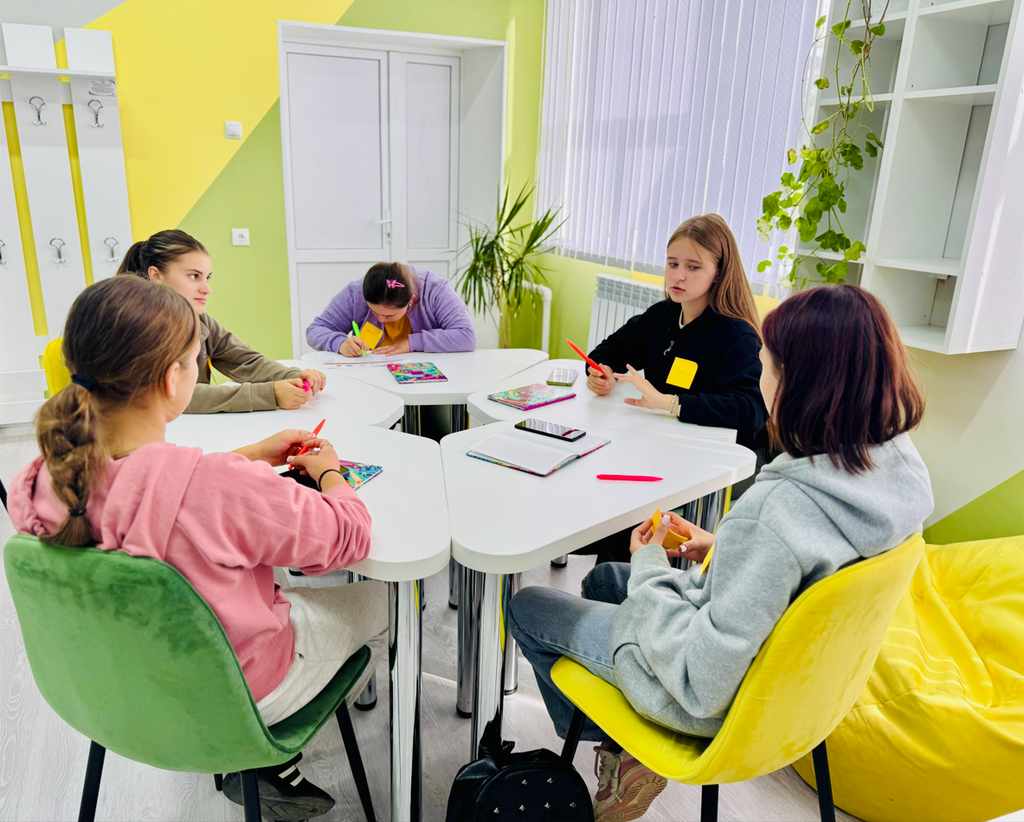
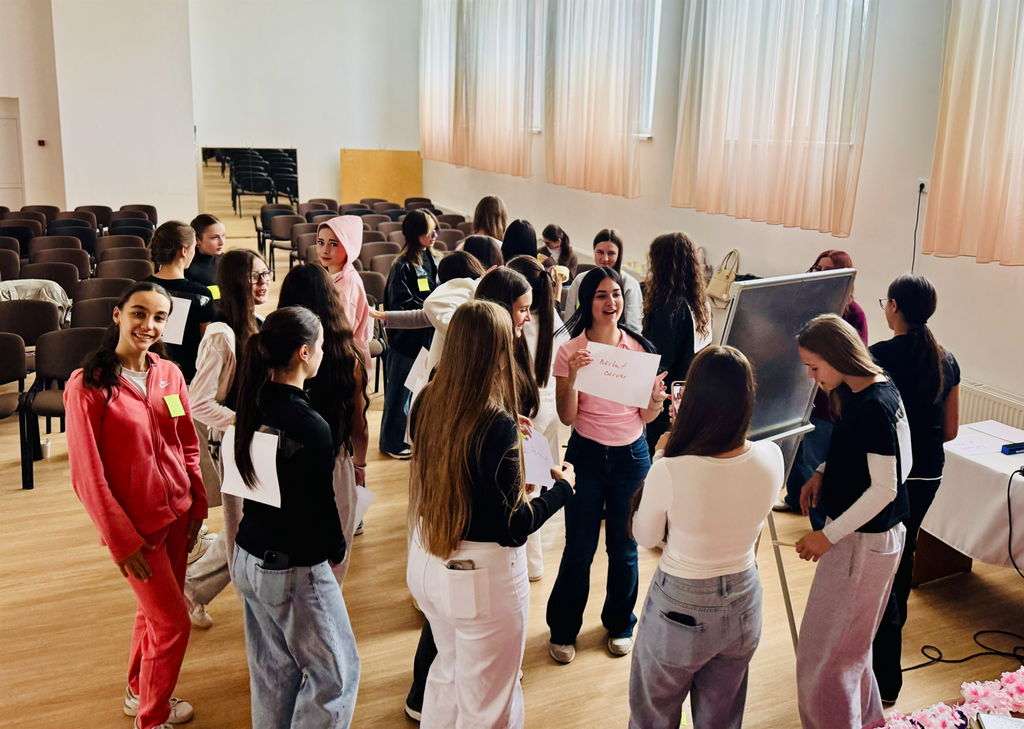
Through the “Strong, Authentic. You – Second Edition” project, trainers from Casa Mărioarei visited schools and communities where conversations about gender equality and violence prevention are essential. The girls discussed gender stereotypes, self-worth, their right to pursue their dreams, and the importance of recognising situations that put them at risk. They also explored the steps they can take to protect themselves and seek help.
In many communities, ideas about what women and men are supposed to do are passed down from one generation to the next. Sometimes, controlling behaviour is mistaken for care, jealousy is seen as proof of love, and violence remains a difficult subject to talk about.
Many people grow up hearing phrases like “That’s how my mother lived, that’s how my grandmother lived; that’s just how it is for women.” Often without noticing, we take on these beliefs, and they can become a justification for patterns that limit the freedom of women and girls. And when painful experiences are hidden out of shame or fear of being judged, recognising violence and seeking support become even more difficult.
That is why information and education matter from an early age. A girl who can identify a stereotype, understand that she has the same rights as a boy, and recognise the signs of an unhealthy relationship has more tools to make informed decisions.
Xenia’s path into mechanics
Xenia is one of the girls pursuing a childhood dream. The Casa Mărioarei team met her during a project visit to a vocational school in Chișinău, where she is in her second year of study, training to become an automotive mechanic and electrician.
She is proud of the profession she has chosen and enthusiastic about the field in which she is developing her skills. Her choice shows that interests and abilities should not be limited by prejudices about which professions are considered “suitable” for girls or boys.
Xenia is not the only one: other girls have also chosen to study mechanics. Their presence in these fields reminds us that equal opportunities also mean having the freedom to choose one’s own path, without gender becoming a barrier.
A Starting Point for Change
A single session on gender equality cannot eliminate stereotypes or, on its own, transform mindsets shaped over generations. It can, however, open up a conversation, challenge a belief that was once taken for granted, or help a teenage girl recognise behaviour she may have mistaken for love.
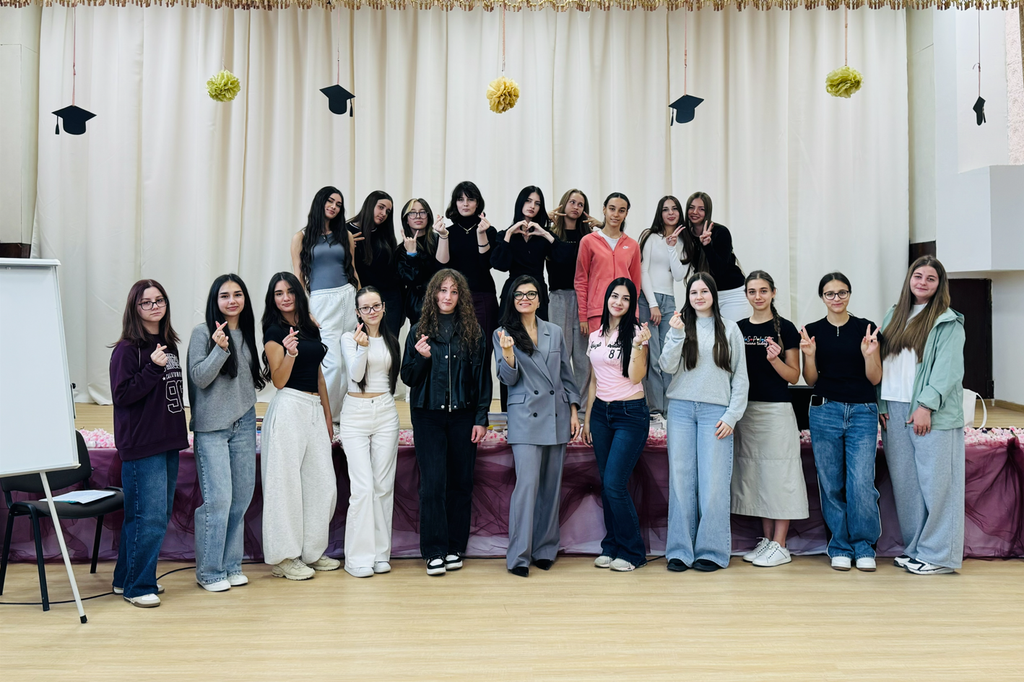
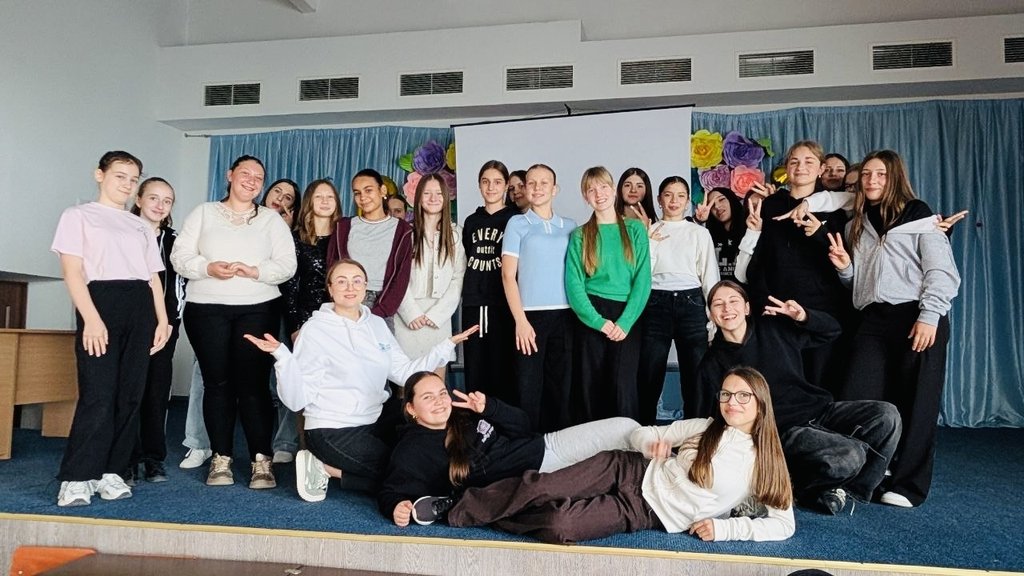
By talking openly about stereotypes, rights and healthy relationships, “Strong, Authentic. You” gave girls in Leova, Nisporeni and Chișinău space to question what they had been taught and to see themselves as equal. Stories like Xenia’s show what becomes possible when girls feel free to choose their own path.
About the project: The “Strong, Authentic. You – Second Edition” project is implemented by Association Against Domestic Violence “Casa Mărioarei”, with the support of UNFPA Moldova, under the Small Grants Programme coordinated by Gender-Centru, under the auspices of the Platform for Gender Equality, and funded by the United Kingdom of Great Britain and Northern Ireland.
About the author: Natalia Screlea is a communications specialist at the Association Against Domestic Violence “Casa Mărioarei” in the Republic of Moldova. With a background in journalism, she has worked for more than a decade in strategic communications, social impact and advocacy, particularly on women’s rights and preventing gender-based violence. Her writing explores memory, identity, democracy and the human stories behind social change.
Cover image and featured images by Natalia Screlea and Diana Cuconu / Casa Mărioarei
Disclaimer: The views and opinions expressed in this article are those of the author(s) and do not necessarily reflect the official policy or opinion/position of Women Against Violence Europe (WAVE).