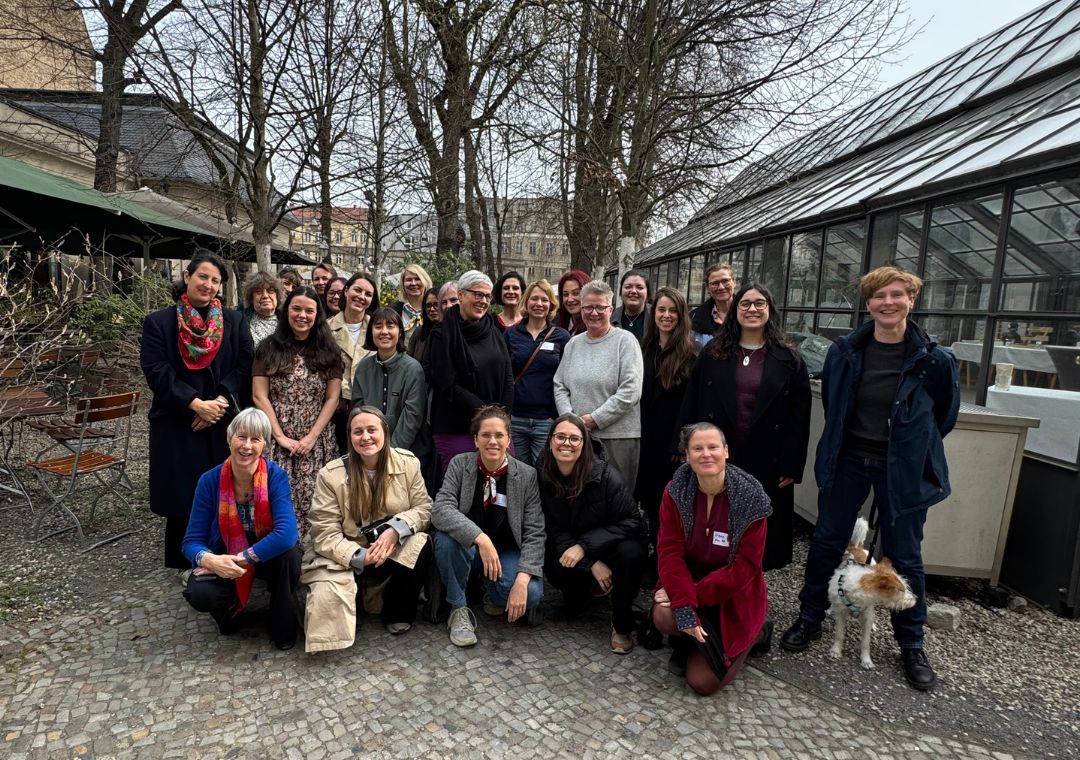
Berlin, 23–25 March 2026
The WAVE Regional Meeting West-Central Europe 2026 brought together women’s rights organisations, activists, and experts from across the region to exchange experiences, reflect on emerging challenges, and strengthen collective strategies in an increasingly complex political landscape.
Held in Berlin, the meeting created an important space for WAVE members to engage in open and critical dialogue, grounded in shared feminist principles of trust, solidarity, and intersectionality. Despite differing national contexts, participants identified a set of common challenges shaping the work of women’s specialist services across the region.
Regional Realities: Political Shifts and Structural Pressures
Discussions throughout the meeting highlighted a clear and concerning trend: a broader political shift to the right, accompanied by the rise of anti-gender and anti-immigration narratives. These developments are increasingly shaping public discourse, policy priorities, and funding environments.
Participants shared how far-right actors are actively instrumentalising violence against women and girls (VAWG), particularly by framing it as an issue linked to migration. This not only distorts the reality of gender-based violence, but also risks undermining survivor-centred approaches and fuelling harmful stereotypes.
Across countries, organisations are navigating:
- shrinking civic space and increasing political hostility
- growing influence of anti-gender and anti-rights movements
- instrumentalisation of VAWG within racist and exclusionary narratives
- pressure to conform to shifting political and funding priorities
At the same time, democratic institutions themselves are under strain, reinforcing the need to view the protection of women’s rights as inseparable from the protection of democracy.
Funding, Competition, and Sustainability
A major concern across the region is the changing nature of funding. Participants described a shift from stable, grant-based funding to competitive commissioning models, creating tensions between organisations and weakening solidarity.
Funding is increasingly directed toward generic service provision, often at the expense of specialist, feminist organisations. This leaves limited resources for essential work such as advocacy, prevention, and capacity-building.
Key challenges include:
- financial instability and short-term funding cycles
- competition between organisations for limited resources
- lack of funding for advocacy, governance, and prevention work
- risk of privatisation and depoliticisation of women’s services
These dynamics are placing significant strain on organisations already operating under pressure.
Digital Violence and Emerging Threats
Technology-facilitated violence against women and girls (TFVAWG) emerged as a key priority across the region. Participants highlighted the rapid increase in online abuse, including the use of AI and digital tools by perpetrators.
The borderless nature of digital spaces creates additional challenges for legal frameworks and service provision, requiring stronger cross-border cooperation and more coordinated responses.
Discussions also addressed ongoing debates around online safety, platform accountability, and encryption, reflecting the complexity of balancing privacy, security, and survivor protection in digital environments.
Resilience, Resistance, and Collective Strategies
Despite these challenges, the meeting underscored the strength and adaptability of feminist organisations across West-Central Europe.
Participants shared a range of strategies to navigate increasingly hostile environments, including:
- developing feminist communication approaches to counter harmful narratives
- strengthening coalitions and cross-sector alliances
- prioritising staff wellbeing and burnout prevention
- building capacity for digital security and online safety
- creating coordinated advocacy strategies at national and regional levels
There was a strong recognition that resilience is not only about sustaining services, but also about maintaining political voice and impact.
Moments of Hope and Solidarity
Alongside the challenges, participants also shared examples of progress and resistance. From large-scale feminist mobilisations to successful advocacy efforts preventing funding cuts, these moments highlight the continued power of collective action.
Solidarity, both within countries and across borders, remains a critical resource. The meeting reinforced the importance of spaces like WAVE, where organisations can exchange knowledge, align strategies, and support one another in navigating shared challenges.
Moving Forward
The WAVE Regional Meeting West-Central Europe reaffirmed that while contexts differ, organisations across the region face deeply interconnected challenges.
Strengthening feminist movements requires not only strategic coordination and knowledge exchange, but also sustained political commitment and adequate, long-term funding.
At a time of growing backlash, supporting women’s specialist services is essential to safeguarding rights, democracy, and equality across Europe.
Behind every service, every strategy, and every moment of resistance are organisations and individuals working under immense pressure to keep women and girls safe. This work is only possible with sustained support. Investing in women’s specialist services means investing in safety, dignity, and equality across Europe.
Donate here