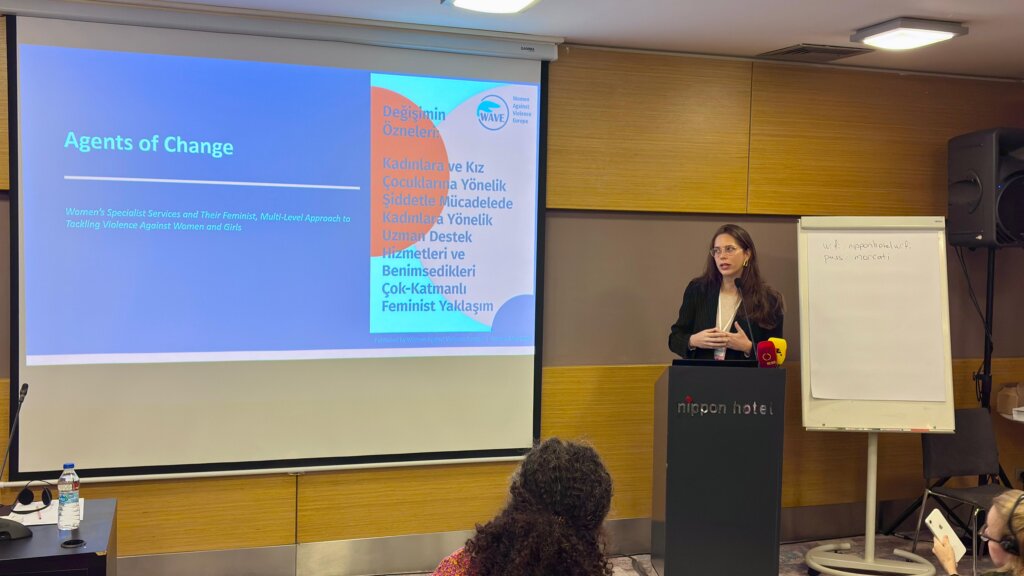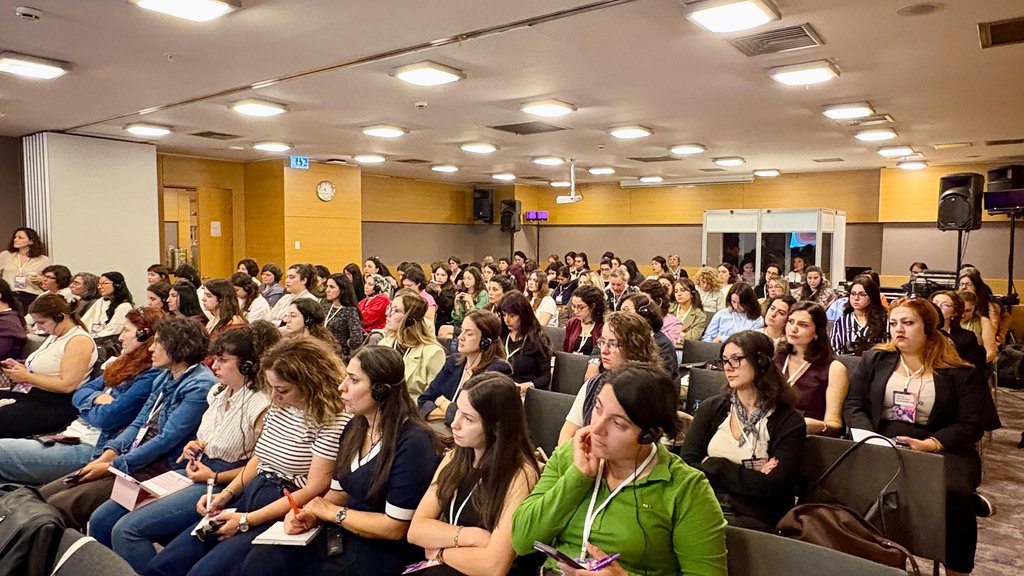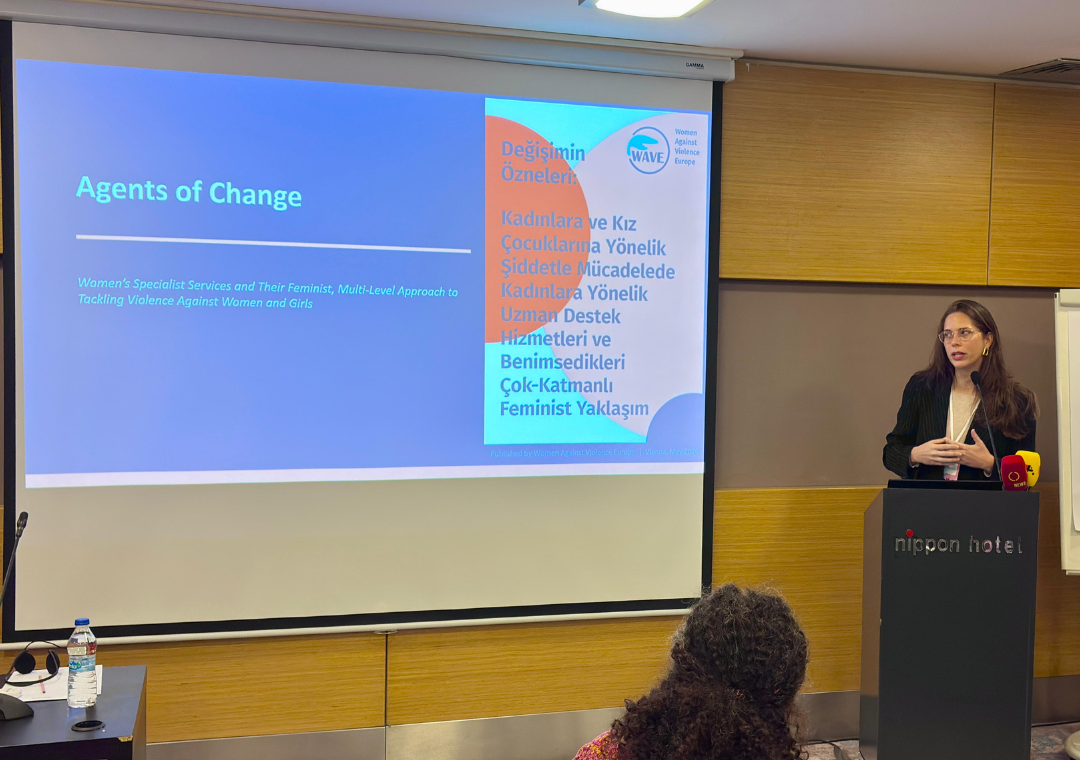
WAVE’s Senior Research Coordinator Elena Floriani spoke at a conference on women’s specialist services, organised by Mor Çatı in Istanbul on 10 October 2026.
Aim
This conference aimed to highlight the importance of Women’s Specialist Services (WSS), offering perspectives to participants from municipalities and feminist organisations by focusing on the work carried out by organisations operating in different countries, at different scales, and with different areas of focus.
Audience
Women from organisations working on combating violence against women across different provinces of Turkey, women from the grassroots feminist movement, and social workers and women working at municipalities’ women’s counselling centres, particularly in Istanbul.
Panel discussions
WAVE participated in the first panel alongside representatives from Danner (Denmark) and Mor Cati. This panel provided an overview of women’s specialist services across Europe, with a particular focus on the feminist approaches and methods that underpin this work. WAVE highlighted the values and working principles shared by WSS across Europe, which make them indispensable and differentiate them from general service providers. These principles include a survivor-centred and trauma-informed approach, multiagency collaboration, primary prevention, and research to guide policy and legislative change, among other activities. WAVE’s presentation drew on the results of the study “Agents of Change: Women’s Specialist Services and Their Feminist, Multi-Level Approach to Tackling Violence Against Women and Girls”. The study was published by WAVE in May 2026, and it was translated into Turkish and shared with the participants. Danner and Mor Cati contributed to the conversation with their frontline experience in accompanying survivors through a feminist, non-hierarchical approach.
The second panel focused more on specific examples of different types of specialist services. Casa della Donna from Pisa, Italy, spoke about work carried out on a relatively smaller scale; the network FNSF from France discussed larger-scale, national-level hotline work; and Por ti Mujer from Valencia focused specifically on supporting migrant women as a women’s specialist service.
After each panel discussion, there was extensive time for the audience to ask questions and share experiences with the speakers.
Final forum
After the first two sessions, a short forum followed, where participants could share their own experiences and engage in further conversations with the guests.