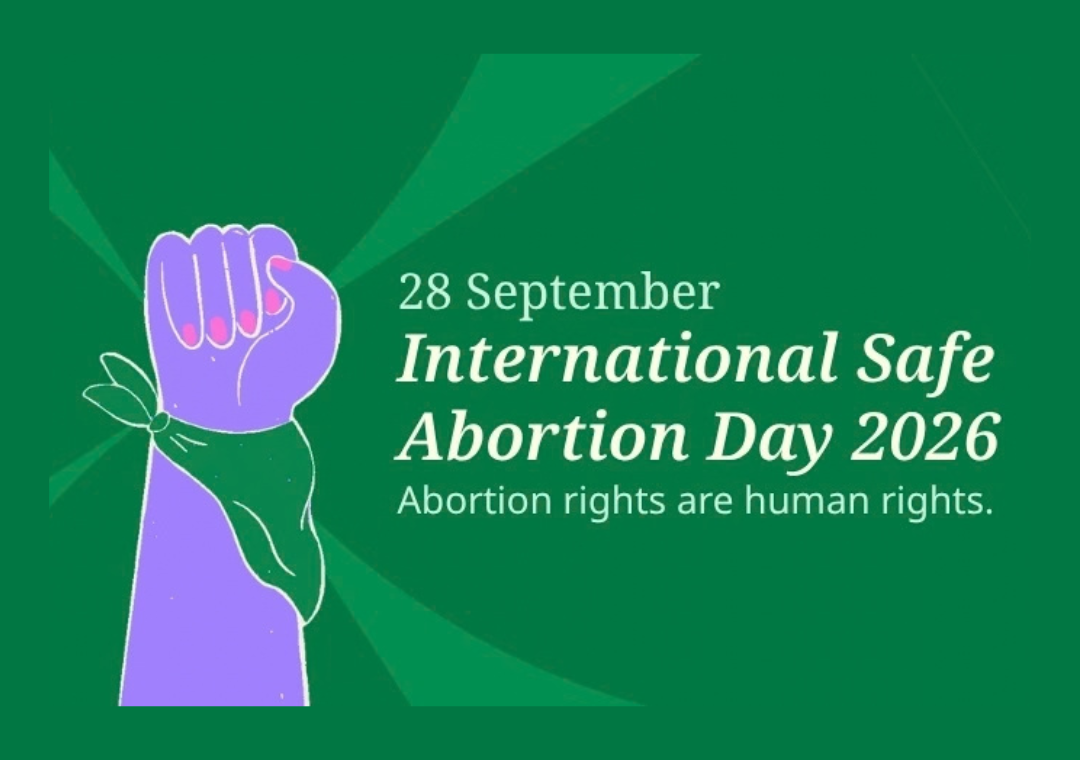
On this International Safe Abortion Day, the Women Against Violence Europe (WAVE) Network joins organisations in Europe and around the world in calling on national, European and international decision-makers to uphold sexual and reproductive health and rights (SRHR), including comprehensive abortion care that is safe, legal and affordable for all women and girls, recognising abortion as an integral part of SRHR. The UN CEDAW Committee has identified the criminalisation of abortion, and denial or delay of safe abortion and post-abortion care as forms of gender-based violence.1 The consequences can be fatal: globally, restrictive abortion laws contribute to around 39,000 deaths from unsafe abortions every year.2 In Europe, five countries – Andorra, Liechtenstein, Malta, Monaco and Poland – still severely limit access to abortion by law.3 In 2024, CEDAW’s inquiry mechanism found that the situation created by Poland’s abortion restrictions constitutes violence against women and may amount to torture or inhuman treatment.4
Abortion care is essential health care, and denying it puts women’s health and lives at risk. Laws that protect the right to abortion, together with services that women can reach, are therefore crucial.
A growing number of European countries are strengthening these protections and taking steps to secure the right to abortion. In March 2026, Luxembourg’s parliament voted to protect the freedom to access abortion in its constitution, after abolishing the mandatory three-day waiting period before seeking an abortion in the year before.5 In April, the Spanish government proposed a constitutional amendment that would require public authorities to guarantee abortion care equally across the country. Currently, public health services provide just one in five abortions in Spain, and in some regions almost none.6 In Switzerland, abortion care is set to be fully covered by health insurance from 2027.7
These developments set an important example for other countries to follow. At the same time, legal protection can only make a difference when governments fund and provide abortion care within their public health systems.
At the EU level, the question is how the right to comprehensive abortion care can be supported and strengthened through funding and policy. In February, the European Commission responded to the European Citizens’ Initiative “My Voice, My Choice”, supported by more than one million people. It confirmed that Member States may use the European Social Fund Plus to support access to abortion care, including for women travelling from countries where abortion is restricted.8 This marks the first time the European Commission has recognised that the EU can play a role in supporting access to abortion care. However, as health care is the responsibility of Member States, although the Commission has opened this new avenue for care, it cannot require governments to use it. Access to abortion care across the EU therefore continues to depend on the political will of individual governments.9
Last year, WAVE called for free access to abortion care to be included in the EU Gender Equality Strategy 2026–2030, under the Roadmap for Women’s Rights principle of “the highest standards of health”. The new Strategy, published in March, acknowledges that challenges to women’s SRHR persist and announces an initiative with the World Health Organisation on women’s health care. However, it does not explicitly address abortion nor recognise the denial of abortion care as a form of gender-based violence, and proposes no new action on it beyond referring to “My Voice, My Choice”.10
At national and EU level alike, commitments to SRHR must be sustained by financial, political, medical and social support, including accessible abortion care. WAVE therefore calls on European and national decision-makers to:
- Remove abortion from criminal law, as the World Health Organisation recommends,11 so that no one faces prosecution for seeking or providing care.
- Guarantee safe, timely, affordable and comprehensive abortion care within public health systems, including medication abortion and post-abortion care, and remove barriers such as mandatory waiting periods, high costs and long travel distances.
- Make full use of the new avenue opened at EU level and dedicate adequate national funding to make comprehensive abortion care available in practice.
- Ensure access for everyone who needs it, regardless of nationality, migration status, income, disability or where they live.
Abortion care is health care. Abortion rights are women’s rights.
- https://docs.un.org/en/CEDAW/C/GC/35 ↩︎
- https://reproductiverights.org/maps/world-abortion-laws/ ↩︎
- https://reproductiverights.org/resources/europe-abortion-laws-2026-europe-global-context/ ↩︎
- https://www.ohchr.org/en/press-releases/2024/08/poland-violated-womens-rights-unduly-restricting-access-abortion-un ↩︎
- https://www.chronicle.lu/category/legal-ip/59923-luxembourg-mps-vote-to-enshrine-right-to-abortion-in-constitution; https://www.luxtimes.lu/luxembourg/luxembourg-abolishes-mandatory-three-day-waiting-period-for-women-seeking-abortion/76844850.html ↩︎
- https://www.lamoncloa.gob.es/lang/en/gobierno/councilministers/paginas/2026/20260407-council-press-conference.aspx ↩︎
- https://reproductiverights.org/news/europe-advances-on-abortion-rights-but-barriers-to-care-remain/; https://www.srf.ch/news/dialog/schwangerschaftsabbrueche-wie-die-schweiz-fast-unbemerkt-die-abtreibungen-erleichtert-hat ↩︎
- https://www.europarl.europa.eu/news/en/press-room/20251211IPR32167/my-voice-my-choice-meps-support-citizens-initiative-on-accessible-abortion ↩︎
- https://reproductiverights.org/news/european-commission-pathway-abortion-access-my-voice-my-choice/; https://www.euronews.com/2026/02/28/my-voice-my-choice-accessible-abortion ↩︎
- https://europe.ippf.org/news/new-eu-gender-equality-strategy-progress-srhr-ambition-still-lacking ↩︎
- https://iris.who.int/server/api/core/bitstreams/59a704cc-4024-412a-97d9-55d86d139602/content ↩︎
Featured image: Berenice Biaani