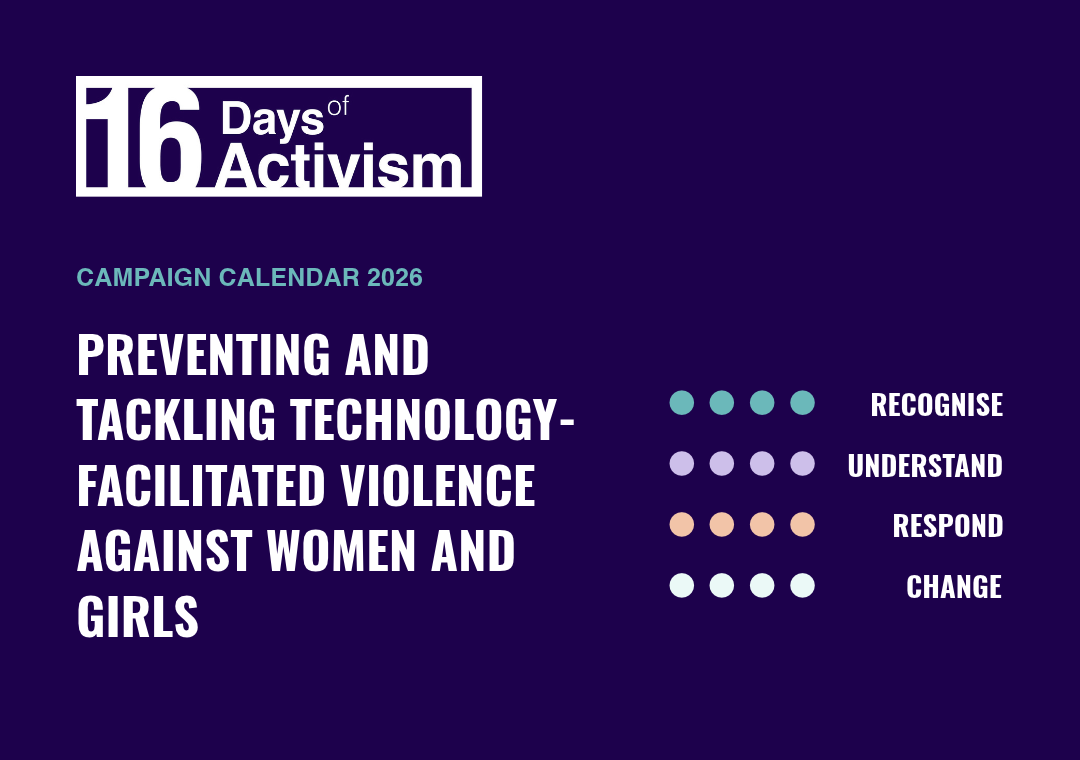
Preventing and Tackling Technology-Facilitated Violence against Women and Girls
Recognise, Understand, Respond & Change
Welcome to the WAVE 16 Days of Activism 2026 campaign. This year, we turn our attention to a form of violence that is increasingly present and deeply harmful: technology-facilitated violence against women and girls. Digital technology shapes how women and girls work, study, organise and stay connected with the people close to them. The same phones, apps and online services have also become part of how violence against women and girls continues.
Digital tools, platforms and artificial intelligence allow violence to take new forms faster than laws, institutions and tech companies can respond. These range from intimate images shared without consent and sexualised deepfakes to stalking through phones and connected devices. This is violence against women and girls: it belongs to the same continuum as violence offline and grows from the same roots of gender inequality, unequal power and patriarchy. It follows women and girls into their homes, schools, workplaces and communities, and it reaches those who speak up in public.
Our campaign moves through four steps:
- Recognise: we name technology-facilitated violence in its everyday forms.
- Understand: we look at how digital tools and platforms make this violence possible, how it targets women and girls in private and public life, and how interlocking forms of oppression intensify it and create barriers to support.
- Respond: we show what feminist responses to this violence look like, highlighting the expertise of women’s specialist services and amplifying youth voices and perspectives.
- Change: we close with what needs to change so that women and girls can live free from violence.
The rights of women and girls do not end where the screen begins.
Explore the WAVE 16 Days of Activism 2026
From 25 November, the International Day for the Elimination of Violence against Women, to 10 December, Human Rights Day, we post daily across our platforms, bringing together the knowledge of women’s specialist services, feminist experts and young activists from across the WAVE Network. The campaign calls for safe digital spaces, for stronger prevention and support, and for women and girls to be listened to and involved in the decisions that shape their safety, online and offline.
Follow along each day, share the campaign, and add your voice to these calls.
RECOGNISE | 25–28 November
What is technology-facilitated violence, and how can we recognise it in everyday life?

International Day for the Elimination of Violence Against Women
WAVE opens the 2026 campaign with a clear message: there is no democracy without the right of women and girls to live free from violence. As the pushback against women’s rights intensifies across Europe and civic space shrinks, technology accelerates both this pushback and violence against women and girls itself. Women’s specialist services stand at the centre of Europe’s democratic infrastructure, protecting women’s lives and defending their rights. Read our full statement here.

What Is Technology-Facilitated Violence Against Women and Girls?
Technology-facilitated violence is any act of violence committed, assisted or amplified through digital tools, from phones and apps to online platforms and artificial intelligence. We set out what it looks like and how it connects to the violence women and girls experience offline.

Recognising the Patterns
Control through technology often blends into everyday life, which makes it hard to name, both for those experiencing it and for the people around them. It can look like stalkerware secretly installed on a woman’s phone, her location tracked without her knowledge or a constant stream of unwanted messages and threats. Each of these acts takes away a woman’s privacy, safety and freedom. We show what these patterns look like, so that more people recognise them as violence and know where women and girls can turn for support, including through WAVE’s Find Help database.

Image-Based Abuse
Image-based abuse ranges from sharing intimate images without consent, or threatening to share them, to creating fake sexual images and recordings with AI, known as deepfakes. All of these are violence against women and girls, violating their dignity, privacy and bodily autonomy. We break down different forms of image-based abuse and how to recognise them.
UNDERSTAND | 29 November–2 December
How does this violence happen, what makes it possible, and how does it reach women and girls in private and public life?

International Women Human Rights Defenders Day
Women’s human rights defenders, journalists and feminist activists increasingly face online abuse designed to silence them and drive them out of public life. Voices from our network reflect on what defending women’s rights in digital spaces looks like, and what it takes to keep going.

WAVE Podcast on Feminist Responses to Technology-Facilitated Violence Against Women and Girls
What happens when the phone in your pocket becomes a tool of control? In a new episode of the WAVE podcast, Ana Lucía Ávila Carrillo, a lawyer and migration policy professional based in Spain, takes us behind the screen: how this violence shows up in women’s lives, why it so often goes unnoticed, and what it takes to respond from a feminist perspective.
The episode premieres at 19:00 (CET) on Radio ORANGE 94.0 in Vienna, before it is published on our platforms.

An Intersectional Lens
Interlocking forms of oppression intensify technology-facilitated violence and create structural barriers to protection and support. As more services, reporting systems and legal procedures move online, women without digital access or skills risk losing independent access to their rights. Building on the podcast episode, we explain why responses to this violence need an intersectional lens.

Safe by Design
From fake accounts set up in a woman’s name to coordinated abuse from hundreds of users at once, many of the harms women experience online are possible because digital platforms and tools were built without considering how they could be turned against women and girls. We ask what safe design means in practice, and why women’s specialist services must be part of these decisions from the start.
RESPOND | 3–6 December
How do women’s specialist services and young activists across Europe prevent and respond to this violence?

International Day of Persons with Disabilities
Digital spheres open up new possibilities for women with disabilities to find information, access support and stay connected, but they also expose them to technology-facilitated violence. Safer digital spaces need to be created with women with disabilities, building on their knowledge and leadership. GESINE Intervention (Germany) shows that even small-scale prevention work can make a difference when it is participatory, practical and flexible, and grounded in their agency.
Public Youth Webinar: The Algorithm of Cyberviolence
From 18:00–19:30 (CET), Ieva Šaduikė from the Women’s Information Centre (Lithuania) leads a webinar for young people on where the line lies between viral trends, jokes and online violence, and how to recognise and respond to it. Register here.

Digital Safety & Youth
Journalist and media researcher Pari Abbasli from Azerbaijan speaks about the state of digital safety for young women and what they need to stay safe online. She also discusses the role of artificial intelligence: how its integration into apps and platforms creates new risks, and possible benefits, for women and girls who experience online harassment or abuse.

Consent, Boundaries and Speaking Up
MARTA Centre (Latvia) explains how technology changes the tools of violence, while the underlying dynamics remain the same: humiliation, sexualisation, coercion, punishment and control. We highlight what society as a whole can do to prevent and respond to this violence: start conversations about consent and digital boundaries early, speak up online, name this violence as violence, and connect with women’s specialist services.

Feminist Responses in a Digital Age
A bouquet of flowers delivered to a new address that only a few people were meant to know. A job offer on social media that turns out to be the first step towards trafficking. In Fempower 2026, seven contributions from WAVE members across Europe show how technology-facilitated violence enters women’s lives, often through the most ordinary tools, and how women’s specialist services work to prevent and tackle it: changing laws, challenging platforms, and designing prevention together with the women they work with. Read the full magazine here.
CHANGE | 7–10 December
What needs to change so that women and girls can live, speak and organise free from violence?

Prevention and Support Go Hand in Hand
Harmful content can spread within seconds, while its consequences for the dignity, safety, mental health and lives of survivors can last for years. Novi put (Bosnia and Herzegovina) shares why responses to technology-facilitated violence cannot only react once harm has happened. Prevention, education and awareness raising, especially among young people, need to go hand in hand with timely, specialised support for survivors and with institutions that can recognise and respond to this violence.

When Laws Meet Practice
Stalking increasingly happens through technology, from everyday tools such as shared locations and family accounts to hidden trackers and stalkerware. Switzerland has recently made stalking a criminal offence, yet a law only protects women when support services, police and courts can recognise these forms of abuse. Tech Against Violence (Switzerland) outlines why professionals need a common understanding, regular training and specialist tech support to take survivors seriously and ask the right questions.

Why Funding Matters for Women’s Specialist Services
Women’s specialist services bring decades of expertise in preventing and responding to violence against women and girls, including as this violence moves into digital spaces. Yet public funding is shifting towards generic, gender-neutral services, and survivors risk losing access to the specialised support they need. Sustainable, long-term funding for women’s specialist services is an investment in civil society and in democracy itself. Donate here.

Human Rights Day
We close the campaign with a new article in WAVE Of Change, our online magazine. Technology-facilitated violence against women and girls is no less real because it happens on a screen or through digital tools. The article explores this violence as part of the wider continuum of violence, and what it means for women’s human rights online and offline. Read the article here.